Mainland Greece + Lefkada Island + the Peloponnese
I did not expect anything special from Greece. My head was already full of tired images: islands packed with white houses and blue roofs, beaches, dirty and depressing cities. But sometimes the lower your expectations before a trip, the more a country can surprise you afterward. That is exactly what happened to me with Greece.
Route
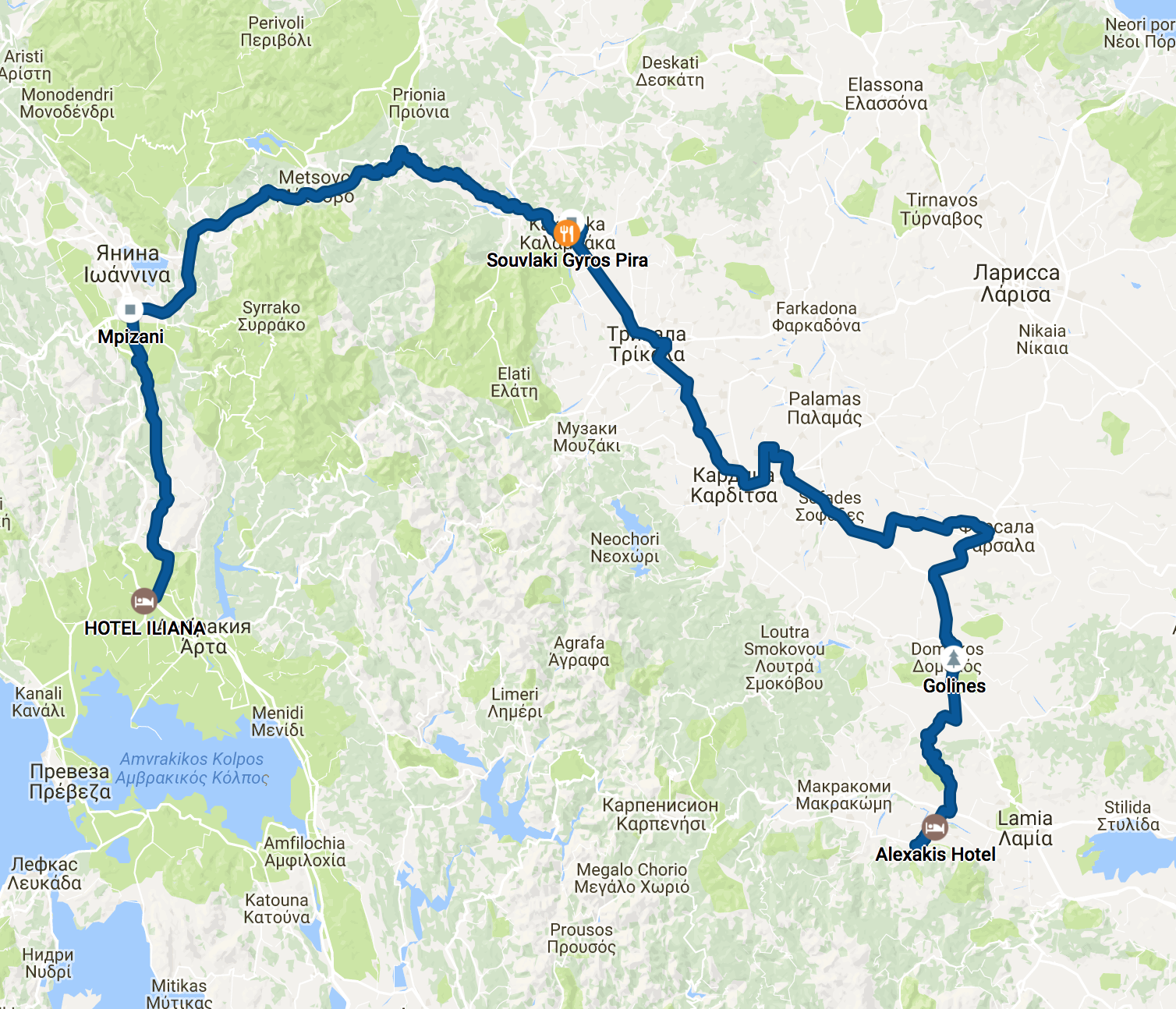
When sketching out the route, I picked only two places that made the trip worth taking: Athens and Meteora. Luckily for me, those points are in different parts of the country. The road from one to the other gradually turned into a loop across almost all of Greece, nearly 2500 km long and six days in duration.
Driving
“What do I need to know as a driver in Greece? What are the local specifics?” “There is only one specific thing: around you there are only Greeks.” “Okay, what does that mean?” “It means the road is their territory, like their yard or their own street. They might not look around when pulling out. You’re the guest there. That is especially true in the countryside.”
So what was it actually like? It turned out that Greeks are some of the most careful drivers I have met.
Traffic in Athens is dense, with speeds in the 60-110 km/h range. In the rest of Greece there are many times fewer cars. On toll highways or rural roads you can drive for twenty minutes without seeing a single one.
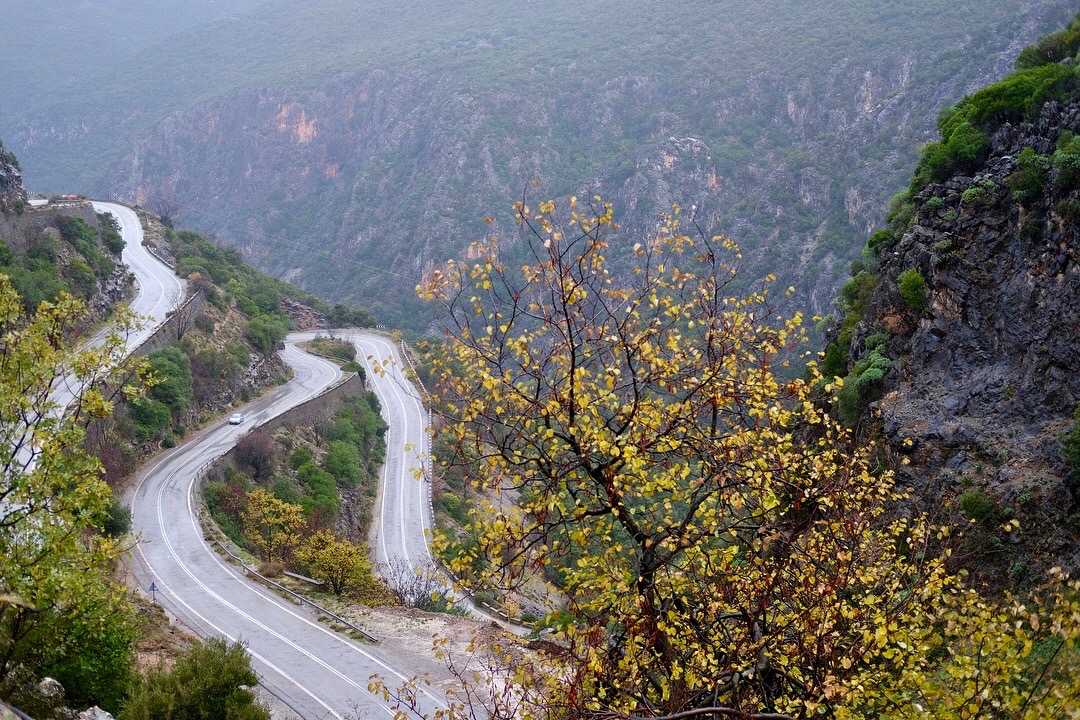
The road surface is good, there are plenty of signs, and speed limits are sensible.
There is an interesting detail about Greek roads: drivers keep closer to the shoulder, or even partly on it, while staying within the speed limit. It seems to be done so that people going 20+ km/h faster can overtake without crossing a double solid line. It was the first time I had seen such large-scale road courtesy.
One more example of that same solidarity: oncoming cars warn you about police ahead by flashing their high beams.
Food
The food I ran into in Greece can be divided into three types:
- hotel breakfasts
- fast food
- proper Greek cuisine
Breakfasts were simple: eggs, omelets, vegetables, salads, pastries, and other sweets.
Greek fast food mostly means local dishes. Chicken or pork skewers are souvlaki. A shawarma-like variation is gyros. Burgers and hot dogs exist too, but they are in the minority. If you plan to drive around the country, you will mostly end up eating fast food; in the countryside that is often all there is.
Almost every place offers Greek salad, and there are countless variations. I never had the same version twice.
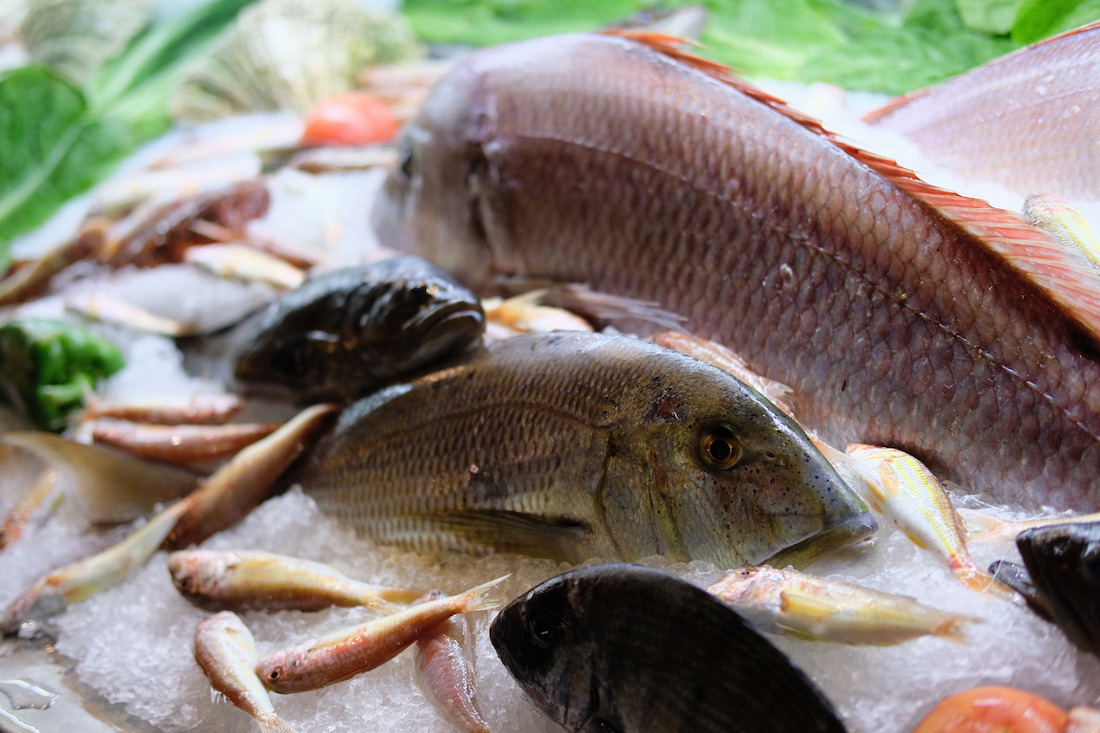
Athens has a huge number of bars, cafes, and restaurants with excellent cuisine. One of them is Mani Mani (map), cozy and delicious.
Mandarins, oranges, lemons, and olives grow on trees, but you should not eat them straight from there.
People
People are kind and responsive. At the end of December there were few tourists around. I heard Russian only twice and Ukrainian once.
Late evening. Rain. There were still almost 200 kilometers left to Kalamata when visibility through the windshield suddenly vanished. It felt as if the wipers were only smearing a layer of grease across the glass, and in the headlights of oncoming cars it glowed like a movie screen. We pulled over almost by touch near a gas station, aiming for its large illuminated logo. The attendant immediately came over to help, vigorously scrubbing the windshield with a brush, and would not accept even a token payment.
Prices
- $200 for round-trip tickets Kyiv-Athens
- $60 for a hotel night, 3-4 stars with breakfast
- $500 for car rental with fuel
- $30 average dinner bill
Timeline
Day 1 (December 24)
Athens
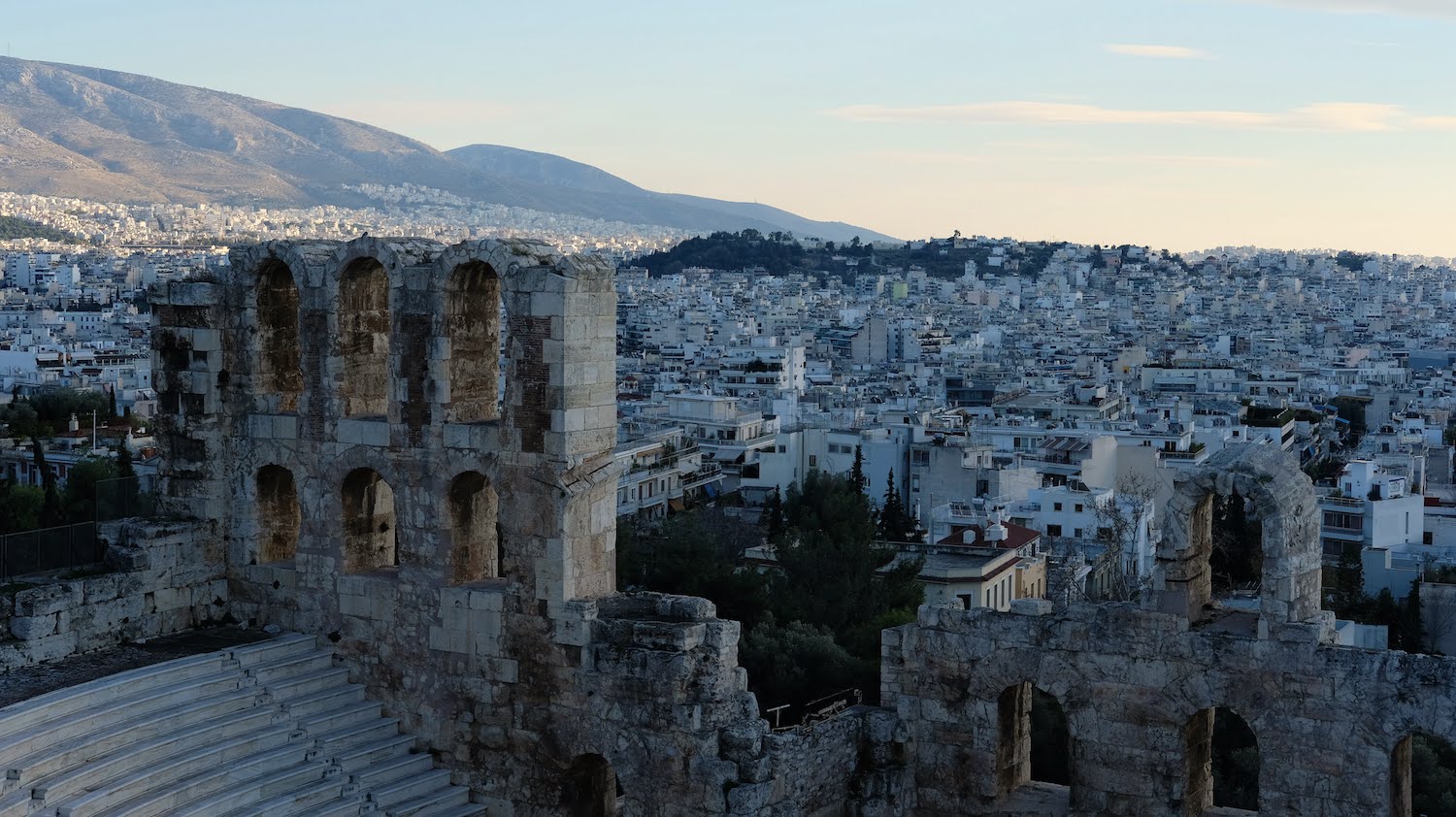
- walk around the Acropolis
- run your hand over thousand-year-old walls
- eat refined food
- drink in a noisy bar
- photograph old cars
- drink coffee at Mikel
- try to find something valuable at the Arabs’ flea market
- avoid the drug-and-Pakistani district
Day 2 (December 25)
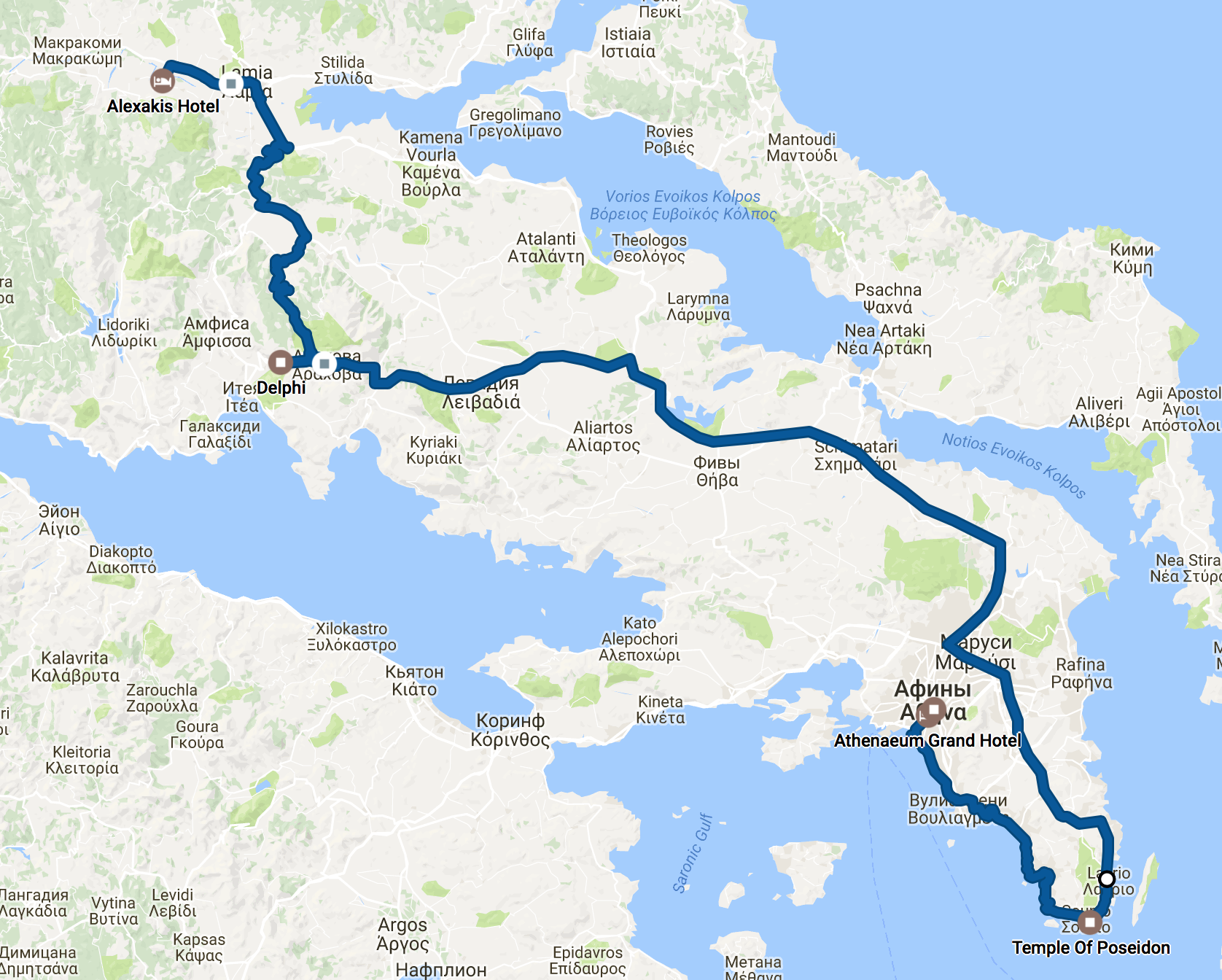
Temple of Poseidon
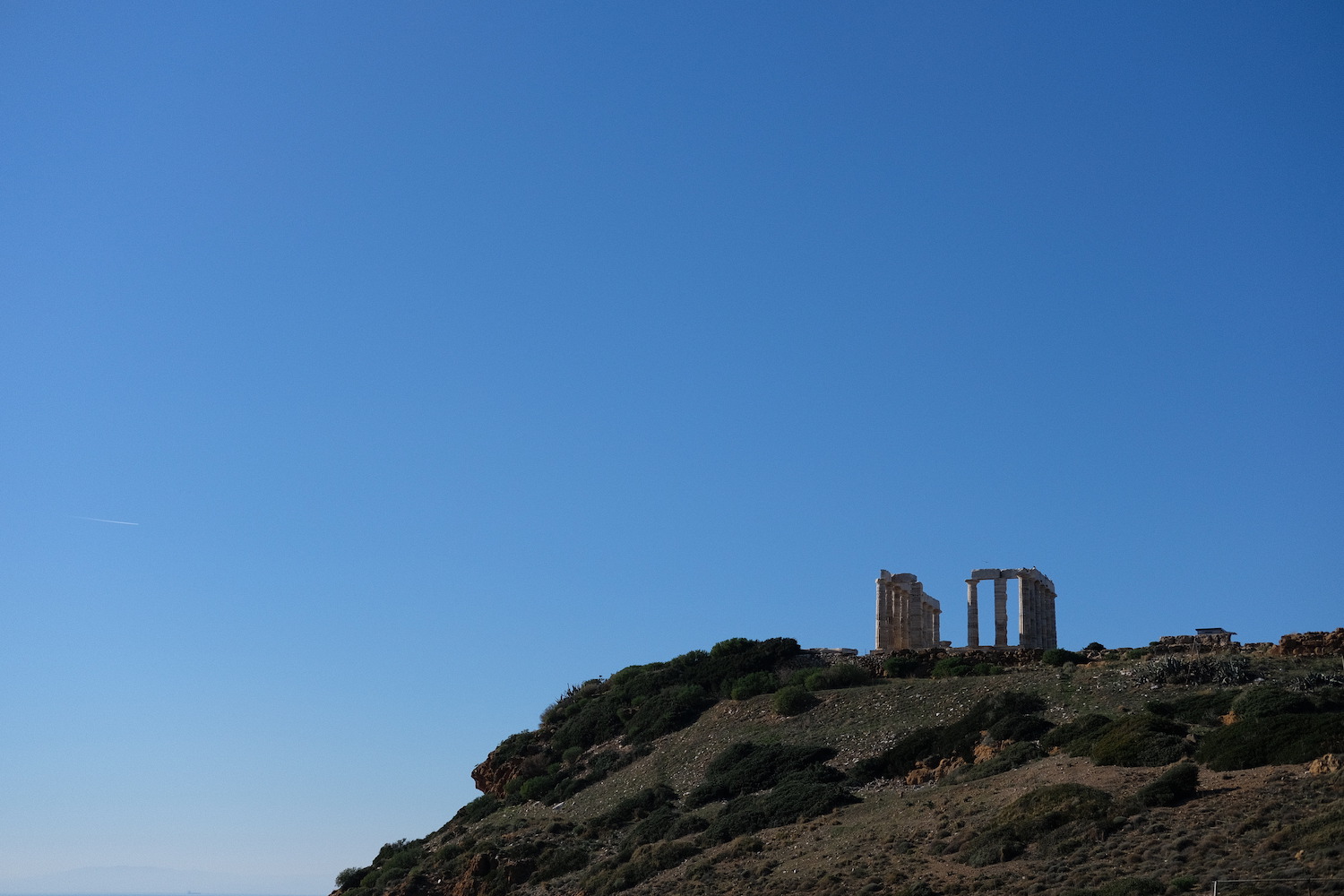
Majestic temple ruins on Cape Sounion. You can only enter the site from 8:00 to 15:00, but even outside those hours there is a wonderful view of the temple and the sea around it.
Arachova
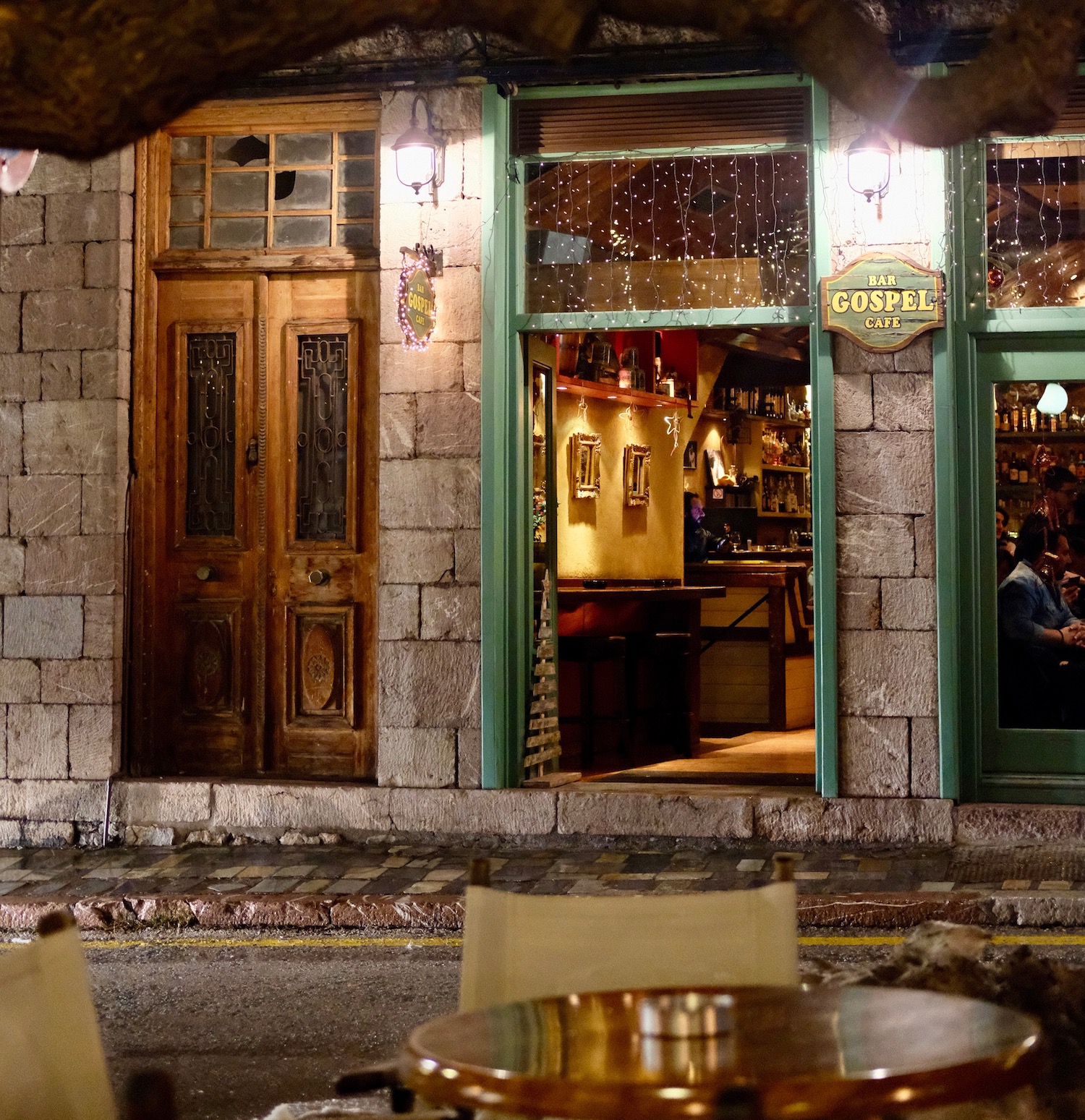
A small mountain village in the middle of nowhere. In practical terms, it is a serpentine mountain road lined with small, similar-looking houses.
We had to park two kilometers from the center.
It is very touristy, but not entirely stripped of character.
Delphi
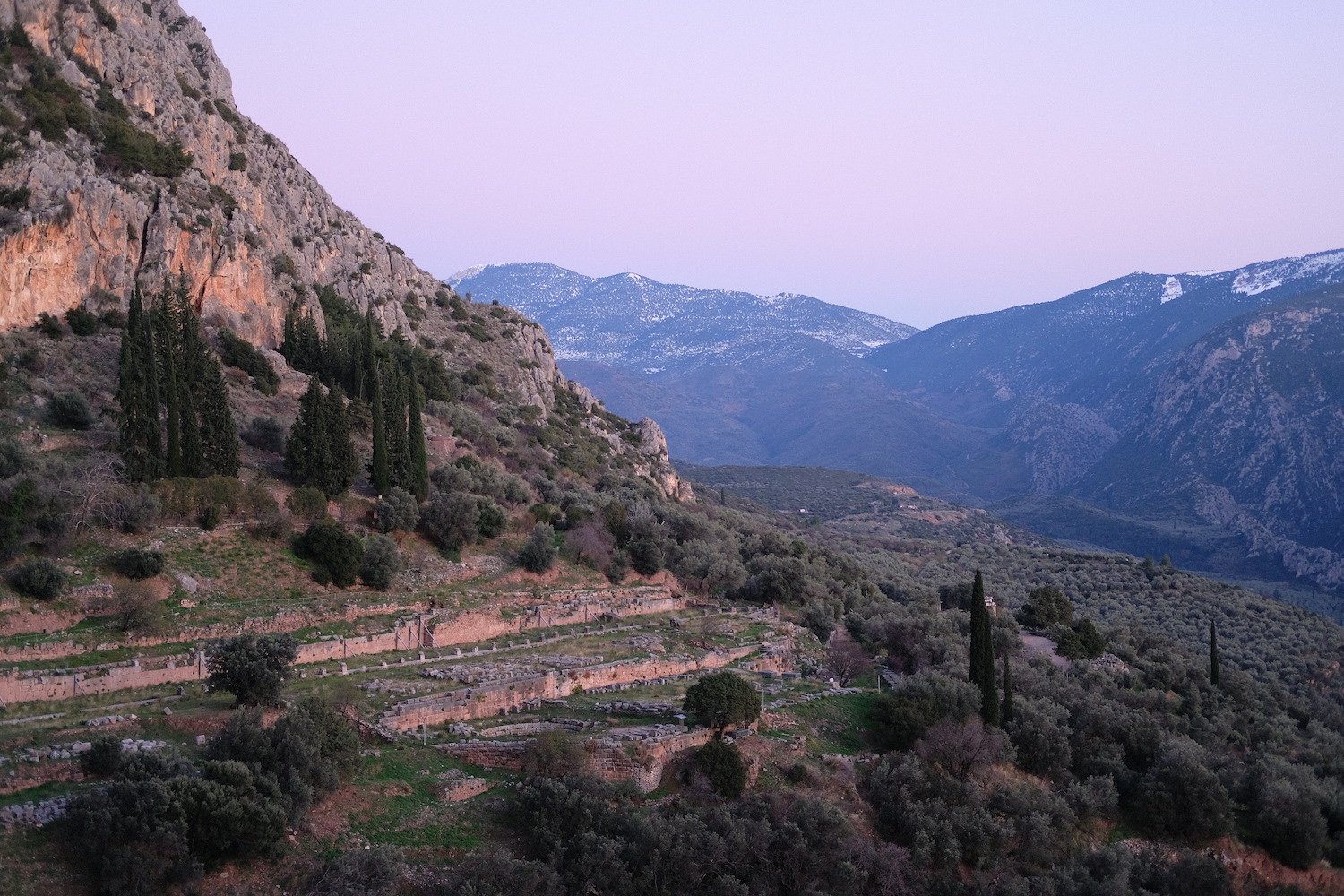
An ancient city on the southern slope of Mount Parnassus. It is better to come when the archaeological site is open, from 8:00 to 15:00, otherwise you will miss the epic view from the theater ruins over the valley.
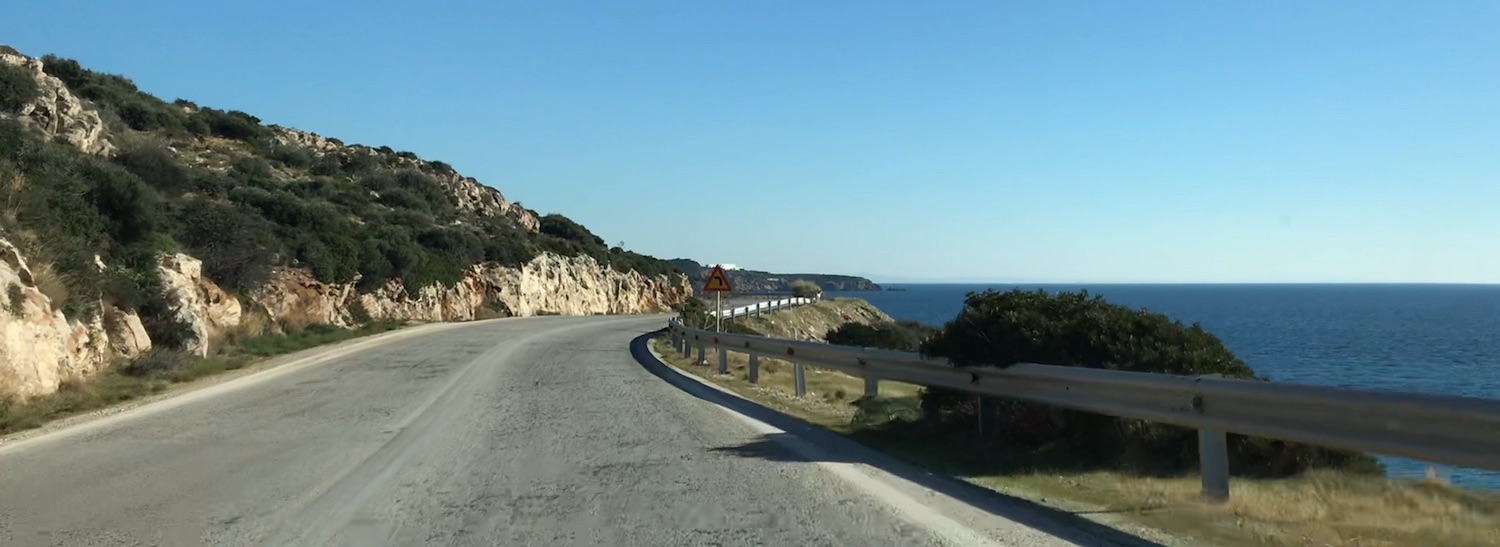
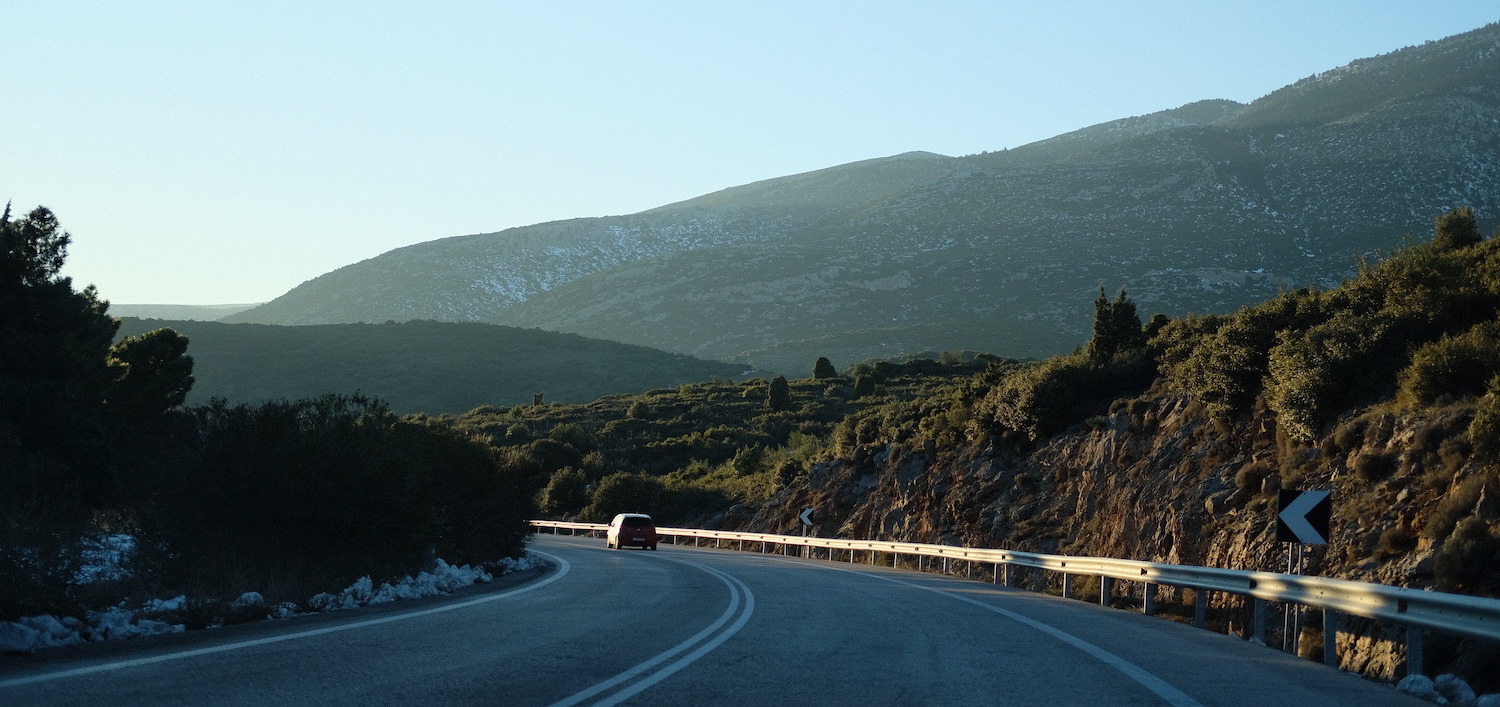
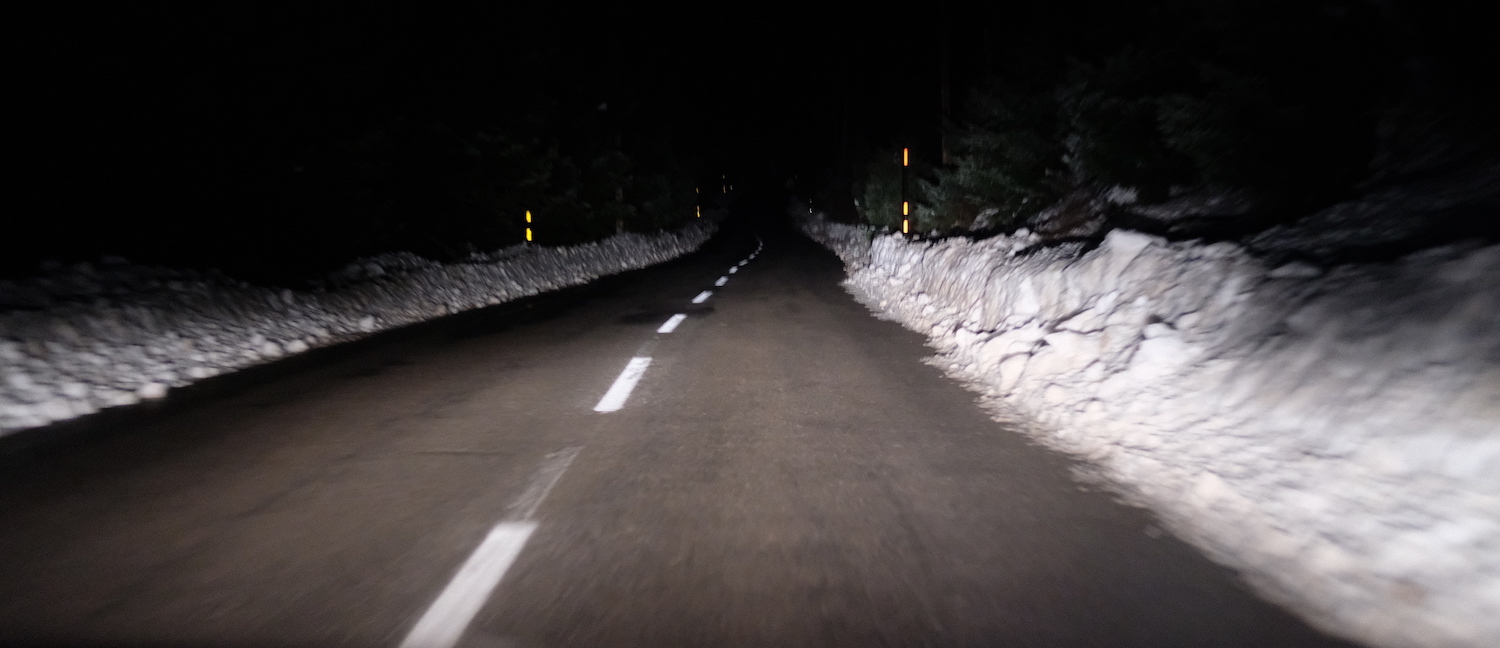
During that single day the weather and the view outside the window changed dramatically. Two hundred kilometers of road felt like a thousand. See for yourself.
Day 3 (December 26)
Meteora
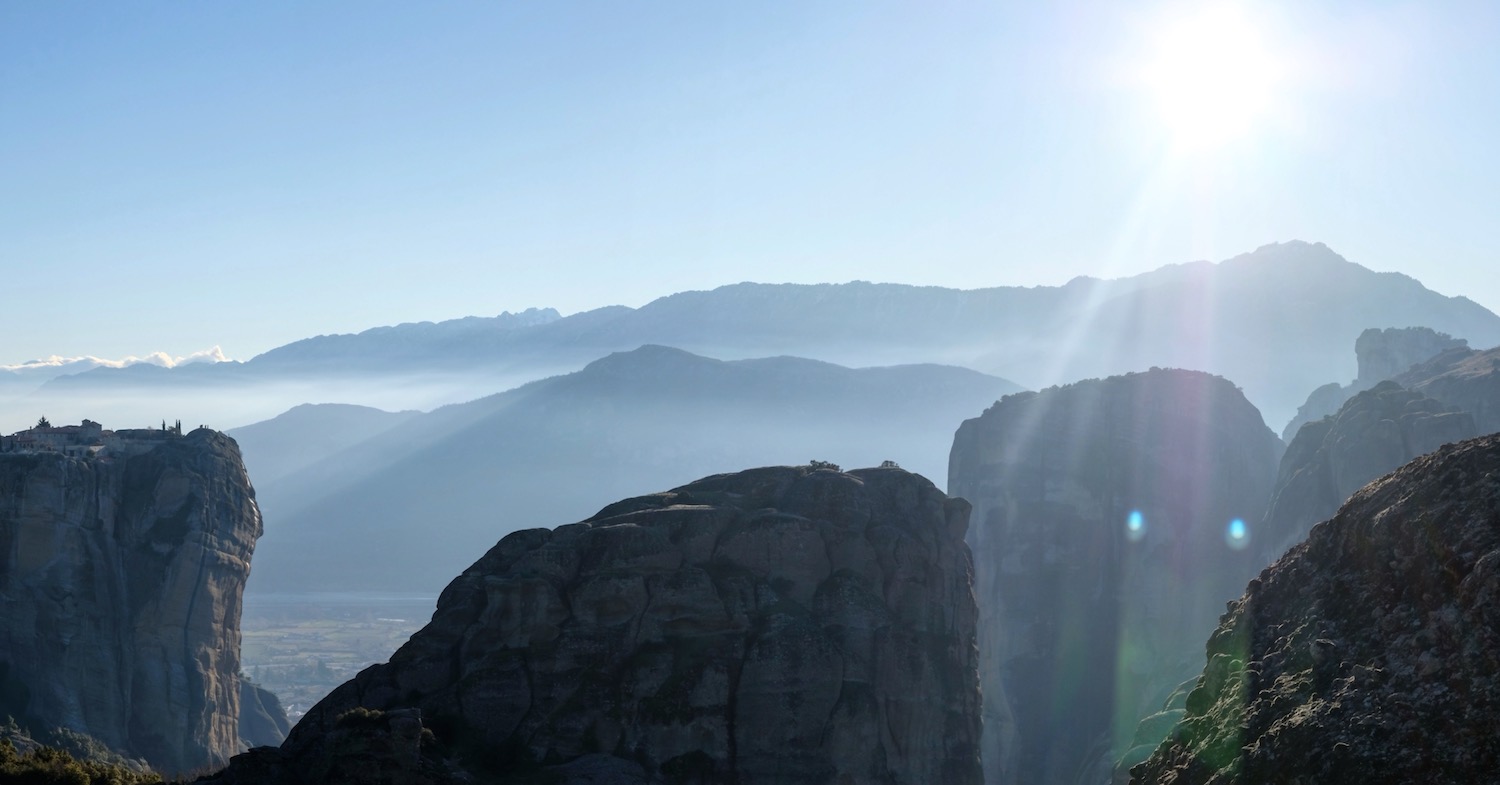
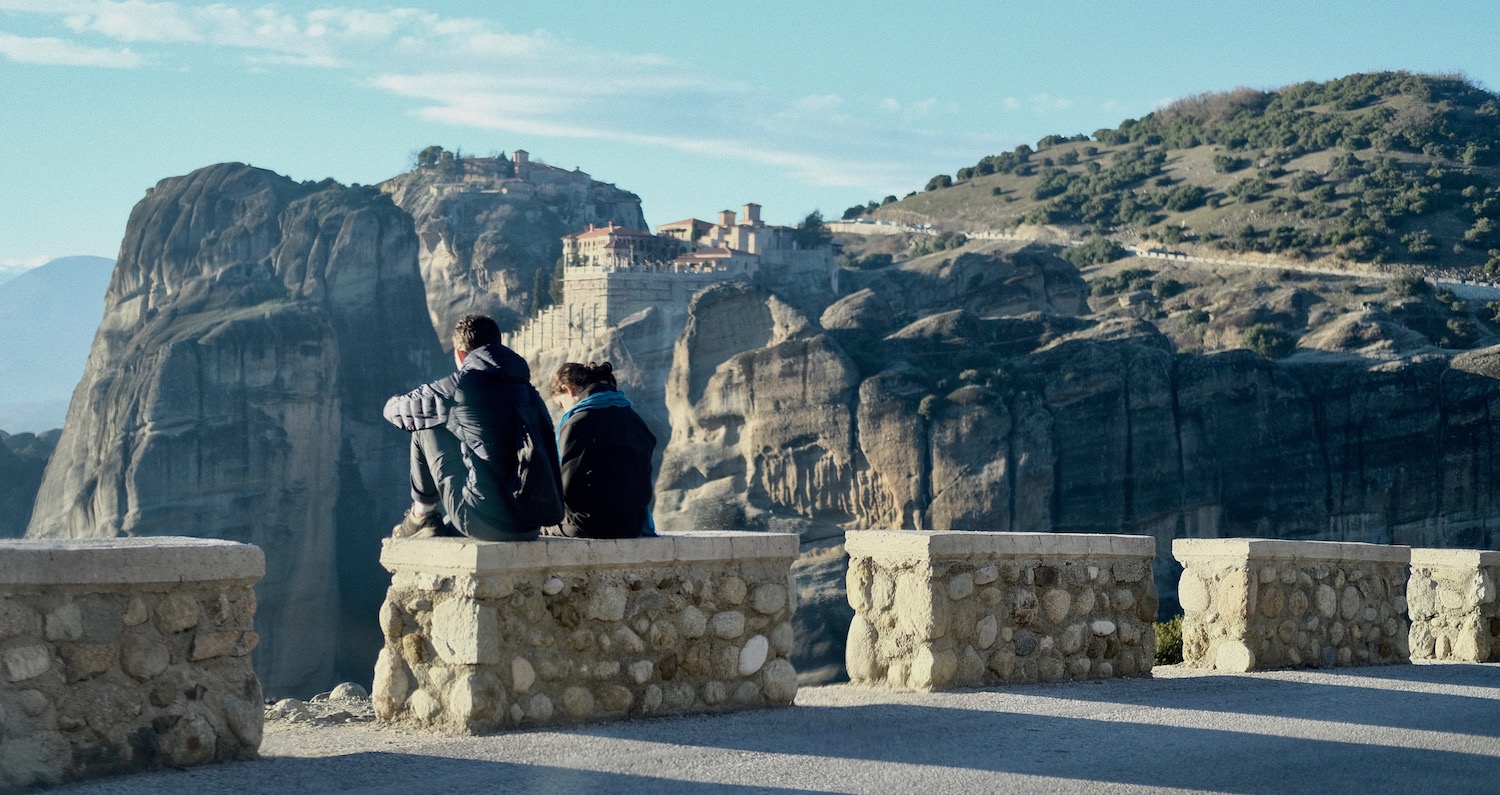
This place alone is reason enough to go to Greece.
Incredible rocks up to 600 meters high near the Thessalian plain. They look as if pieces of mountain broke off and wandered away to mind their own business, slowly by human standards, in the way stones can move. Meteora in Greek means “suspended in the air.”
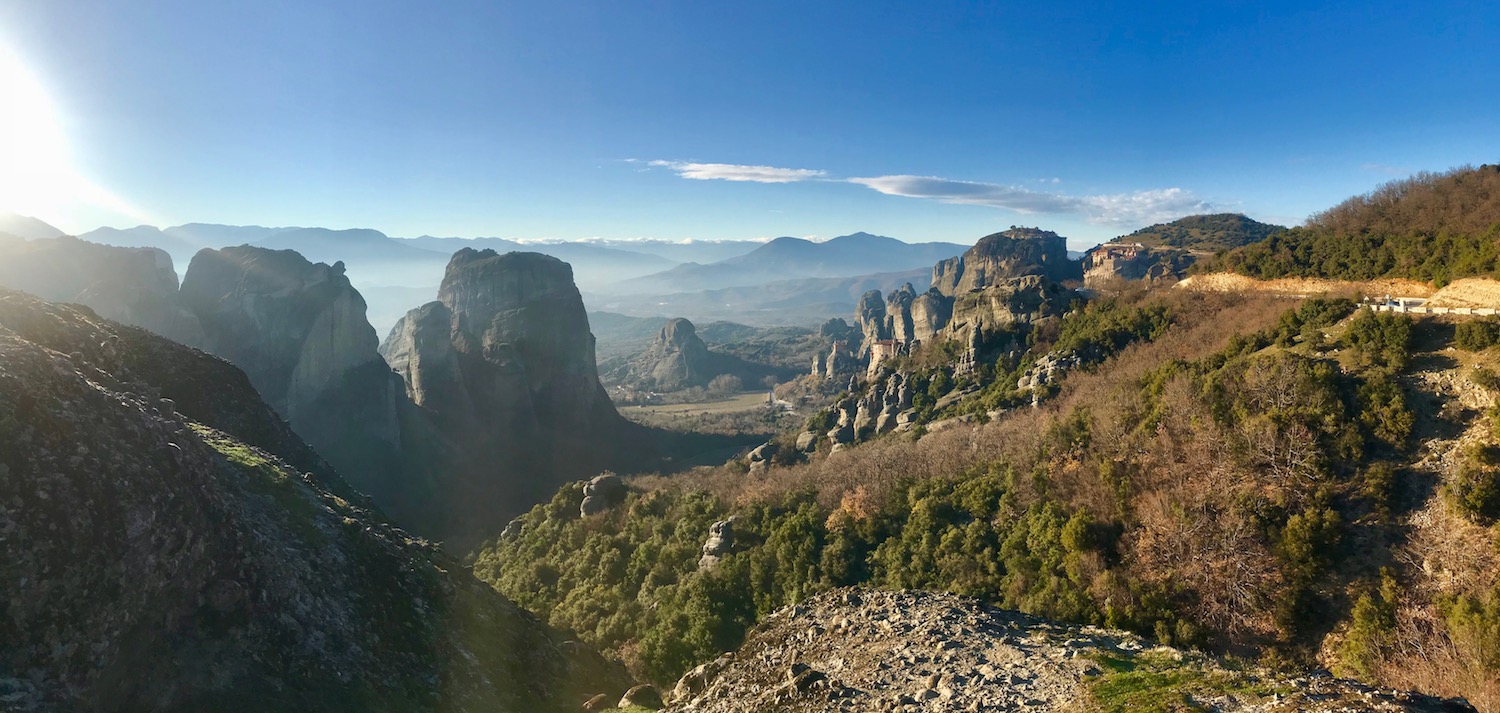
Throughout history there were 24 monasteries on these rocks. Now only 6 remain: 4 male and 2 female. Having been there, the number 24 does not surprise me at all. It is a place with very strong energy, something I think anyone can feel.
Day 4 (December 27)
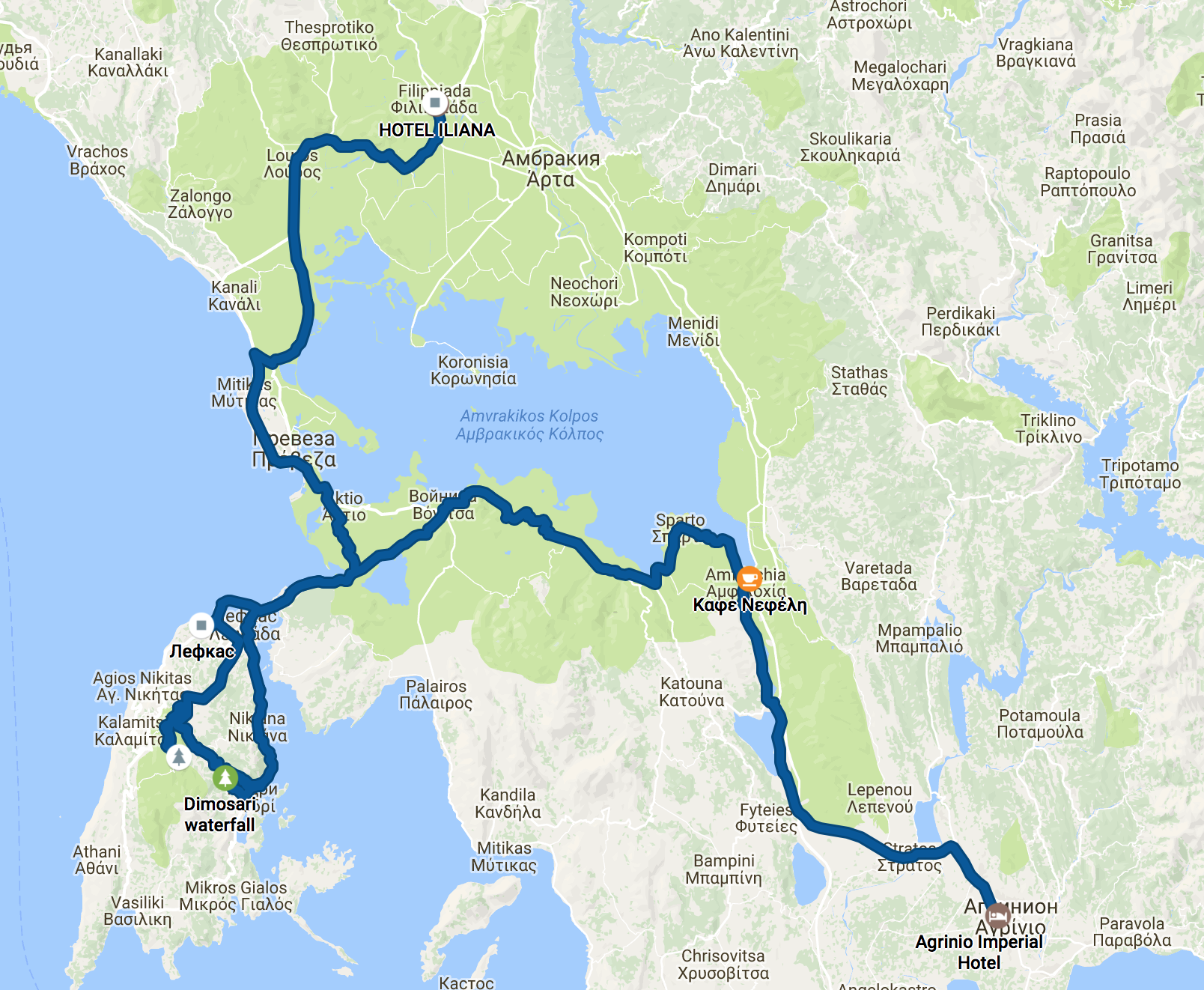
Lefkas Island (Lefkada)
One of the few large Greek islands you can drive onto by bridge.
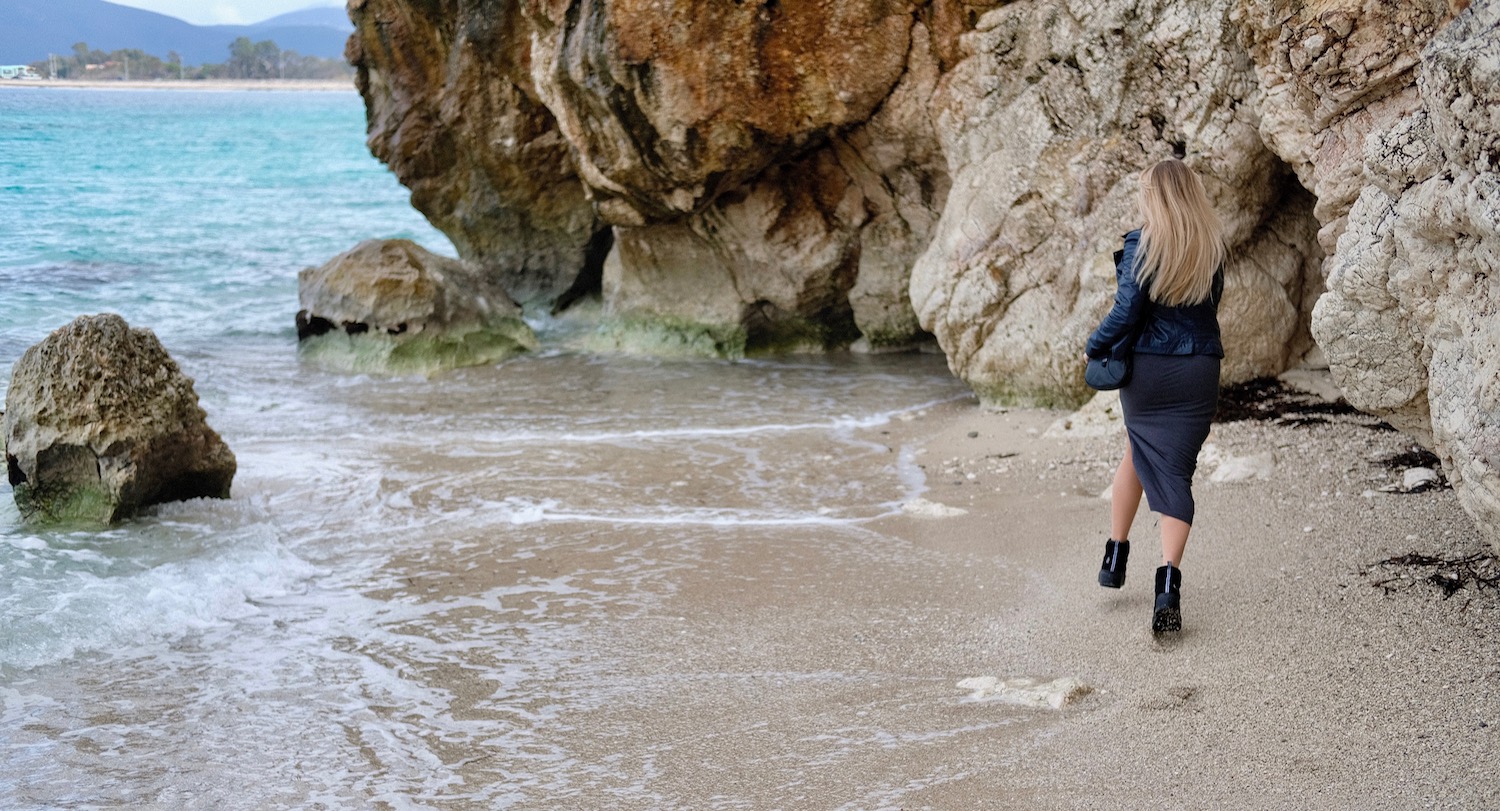
The island itself is not especially interesting except for its rocky beaches and azure water.
Highest point of the island
Profitis Ilias Lefkada Temple
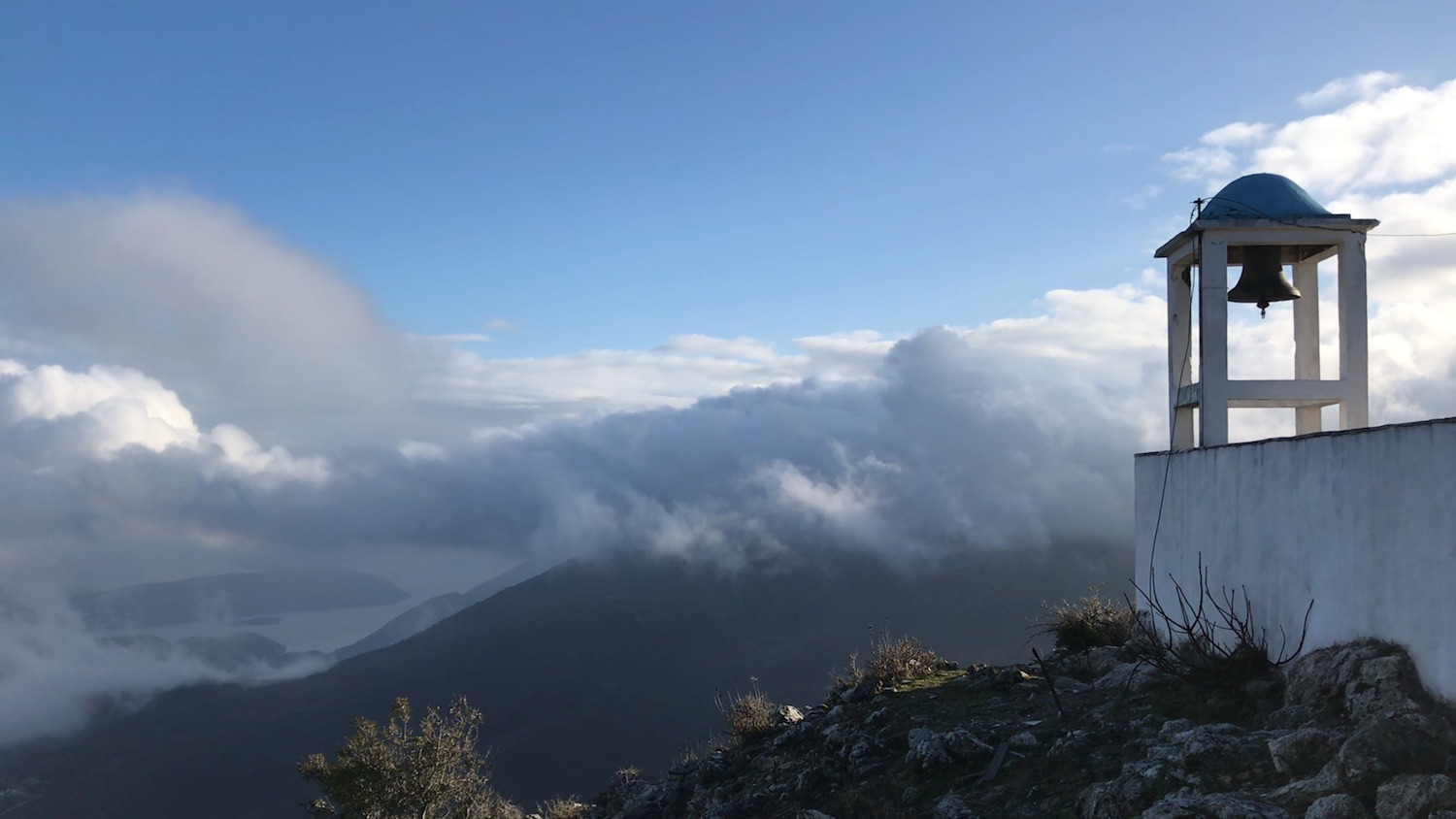
The second most memorable place in Greece after Meteora.
Drive about thirty kilometers of switchbacks from the beach and suddenly you are on top of a mountain.
If you look into the distance rather than under your feet, the feeling is like being on board an airplane: clouds drift below you, the wind tries to knock you over, and breathing feels lighter than ever before.
Waterfalls
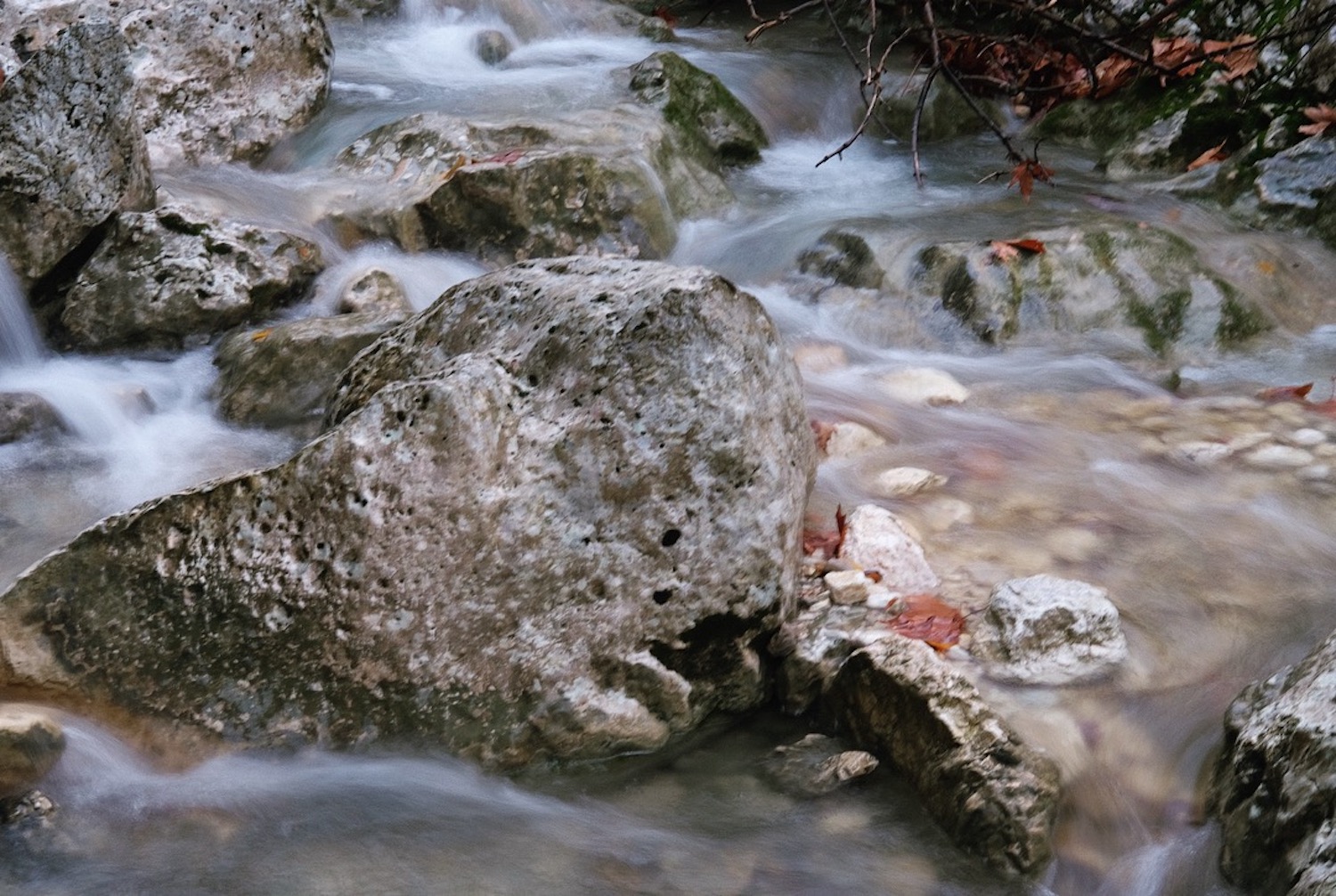
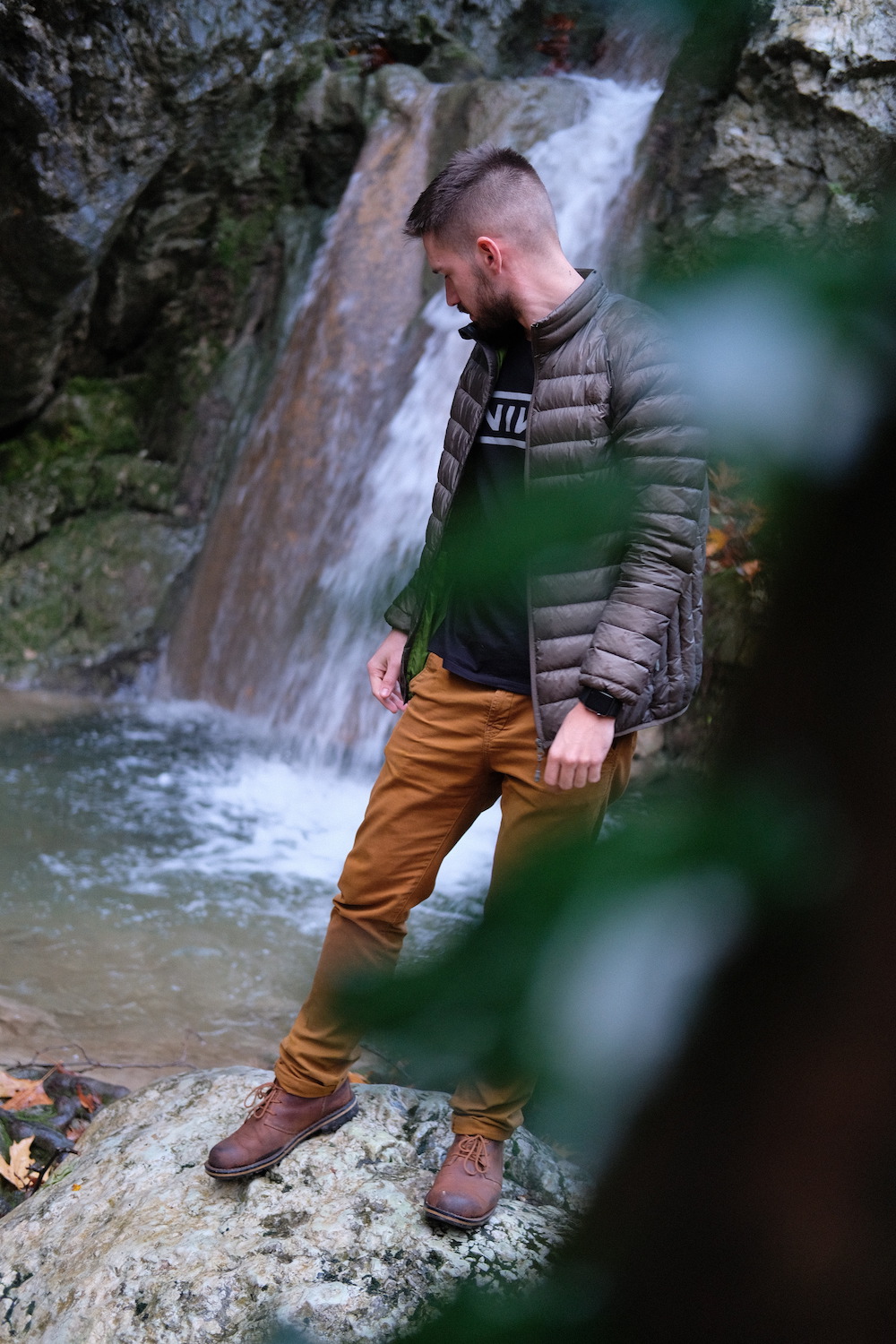
Half an hour’s drive from the previous place, in a mountain gorge, you can find several small but very picturesque waterfalls.
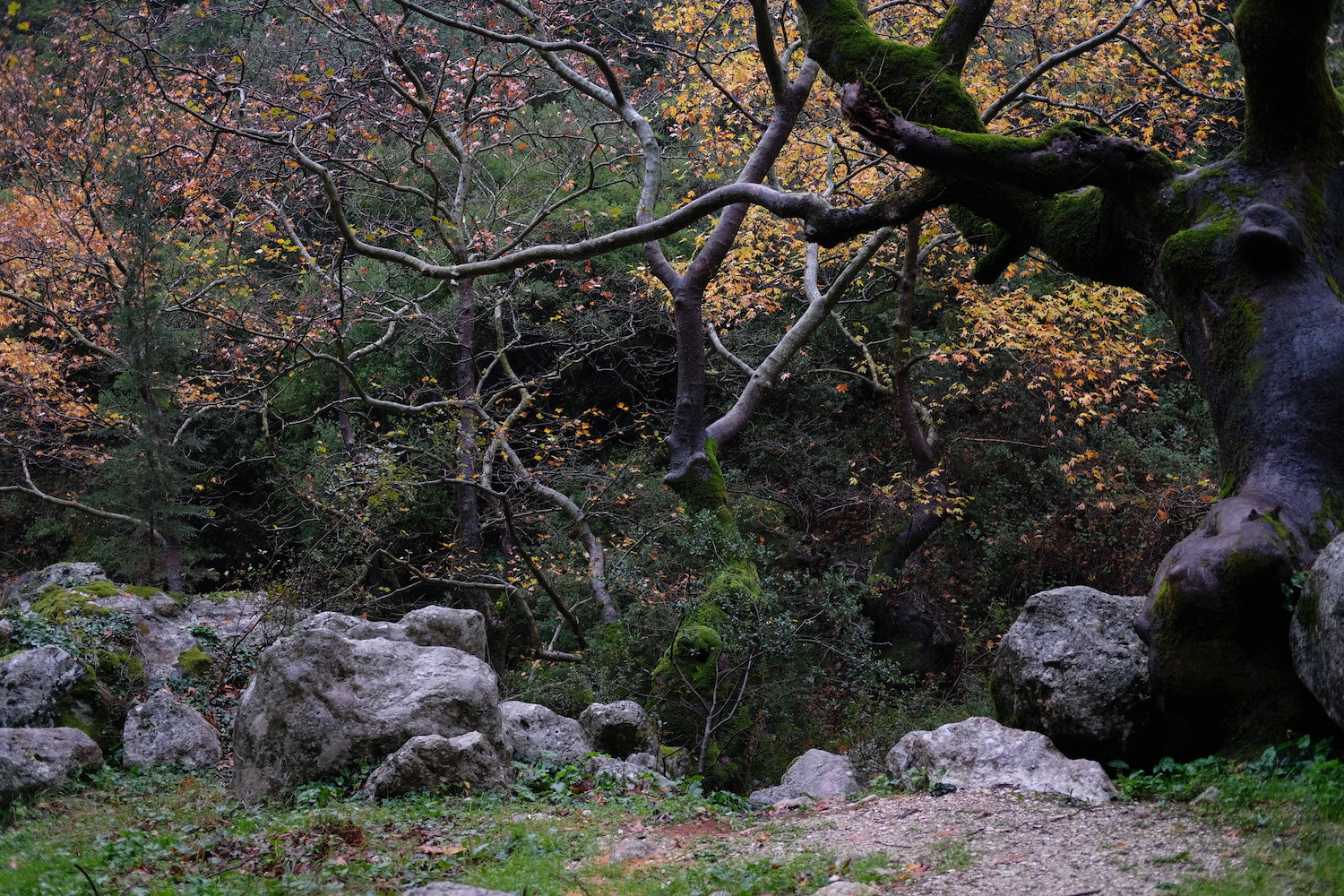
Bright autumn nature, the murmur of water, and no people.
Day 5 (December 28)
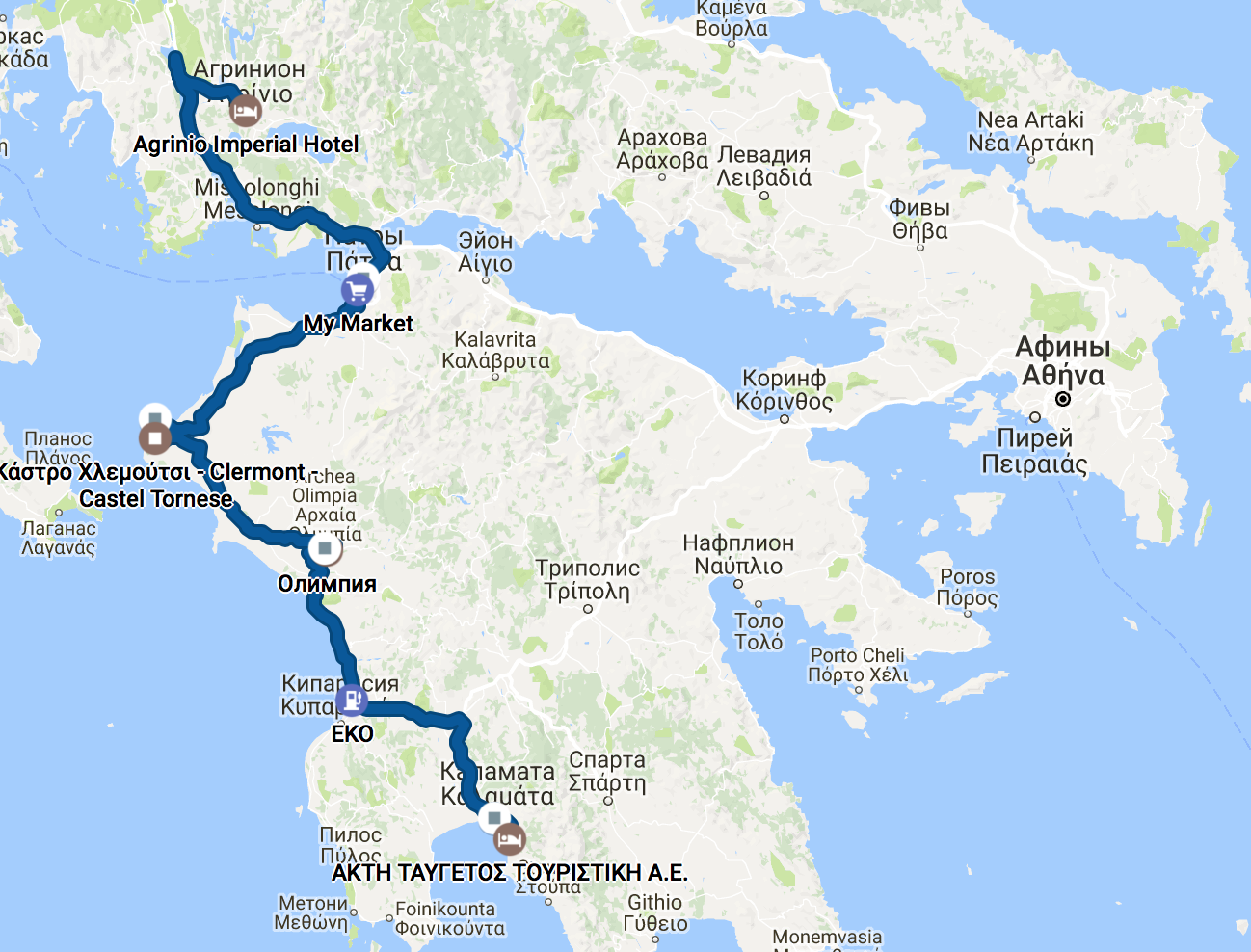
Patras
A large port city that, like many Greek cities, is dirty and gray on the outskirts and grows cozier as you approach the historic center.
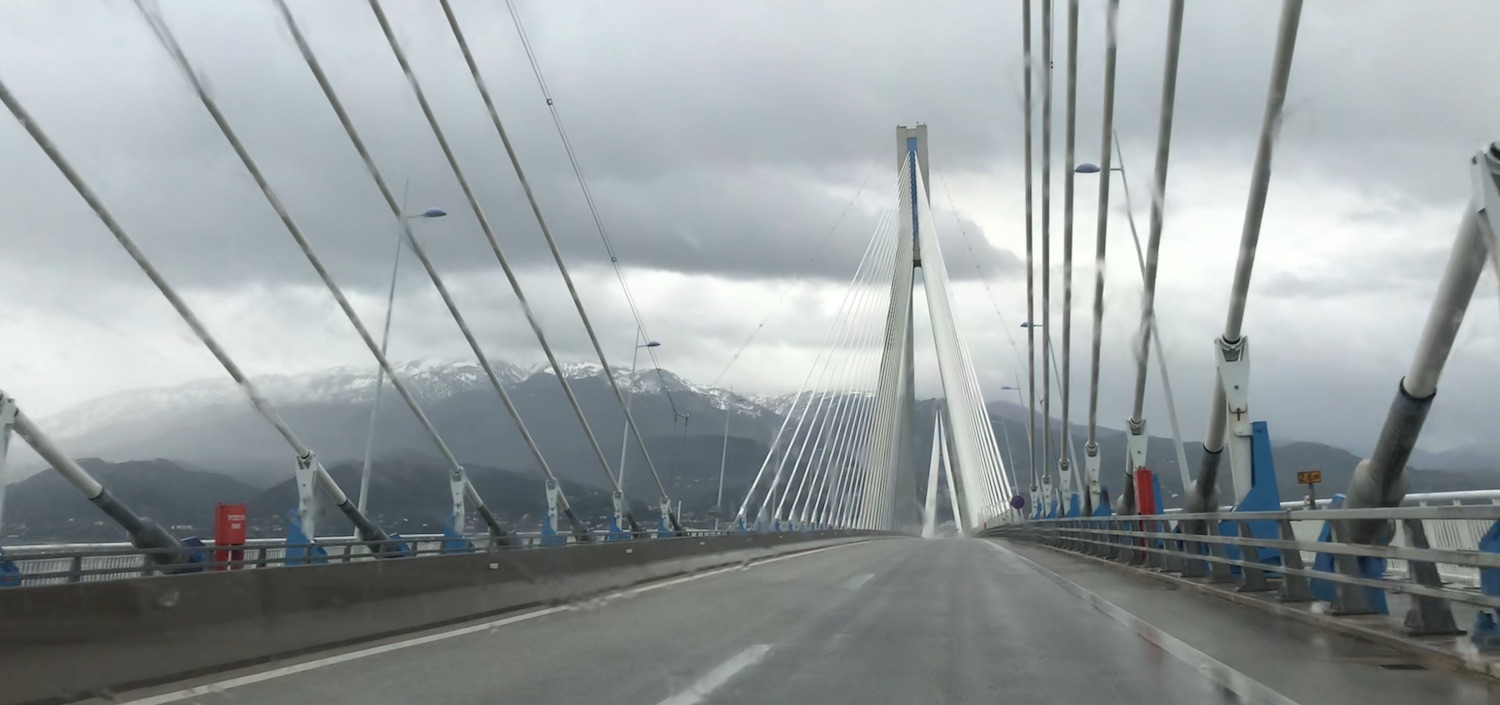
To reach Patras from mainland Greece, it is worth driving across the cable-stayed bridge over the Gulf of Corinth, which connects the Peloponnese with the rest of Greece. The bridge can extend by 35 mm per year to keep up with the peninsula’s movement. Its construction cost 630 million euros, and now the crossing costs 13.3 euros for a passenger car.
Olympia
Judging by the information, it is a wonderful place to visit, but at 22:14 there is absolutely nothing to do there. Trust me on that.
Kalamata
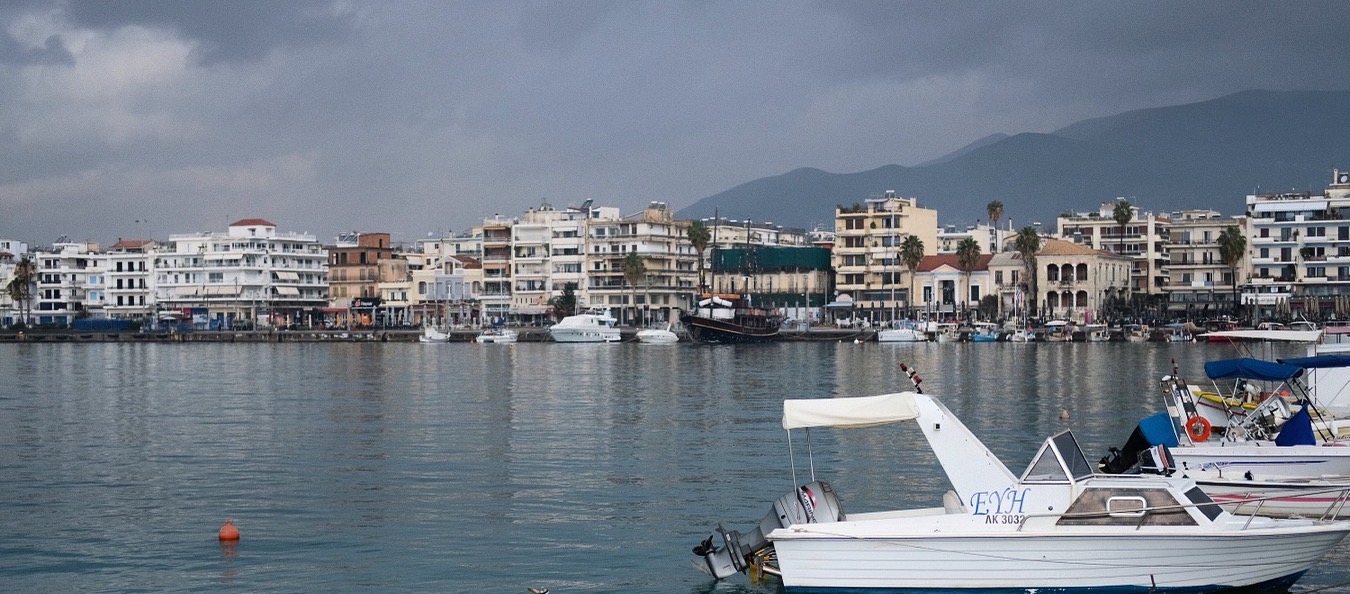
A very cozy city, the first one like that during the entire trip.
Day 6 (December 29)
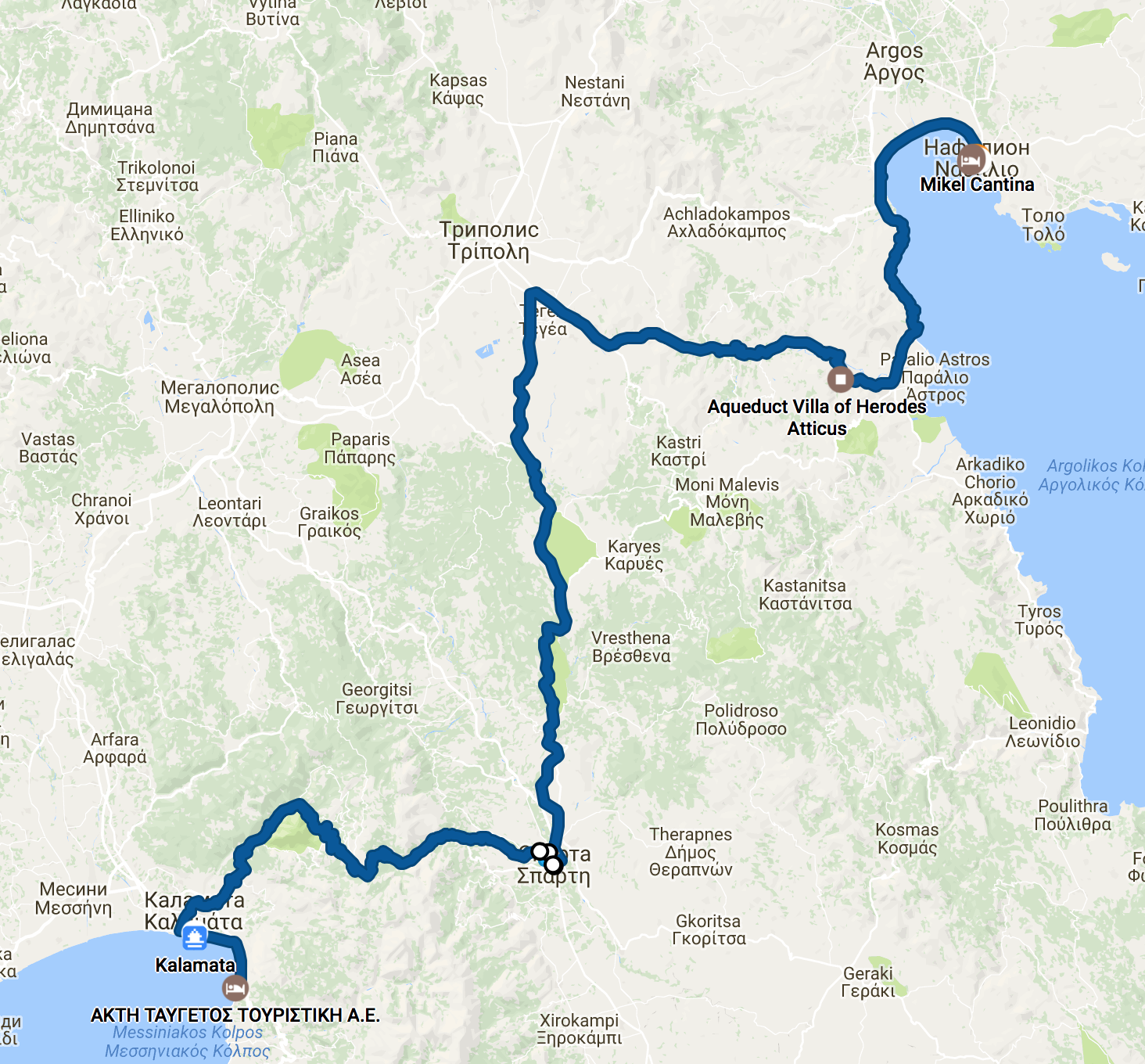
Sparta
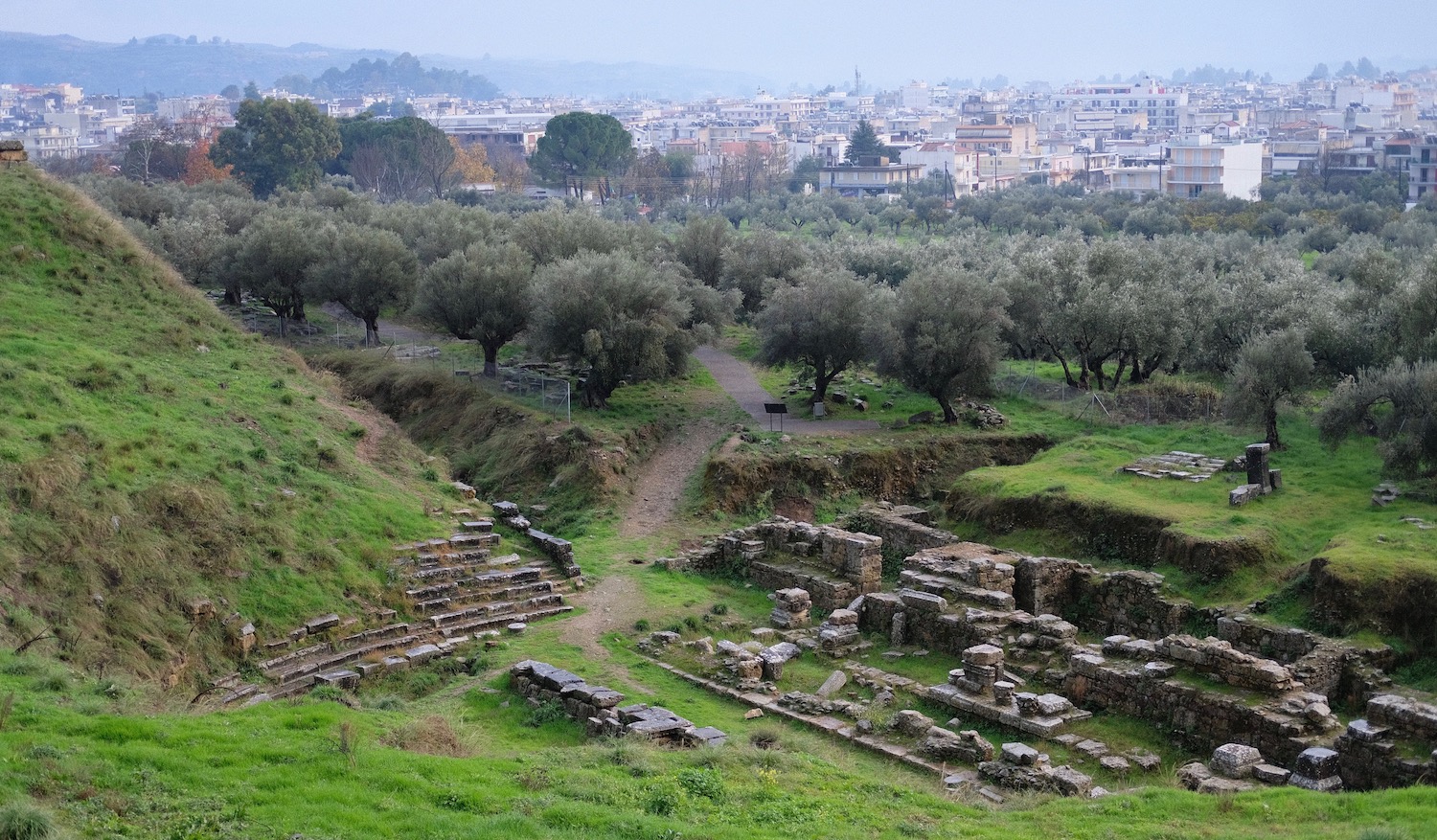
The ruins of the ancient city-state of Sparta. Today olive trees grow all over the area, and it looks more like a garden than an epic historical site.
Nafplio
Romance and coziness are the first words that come to mind when describing Nafplio. Many people consider it the most picturesque city in Greece.
The sea approach to the city is protected by the Venetian fort on the tiny island of Bourtzi.
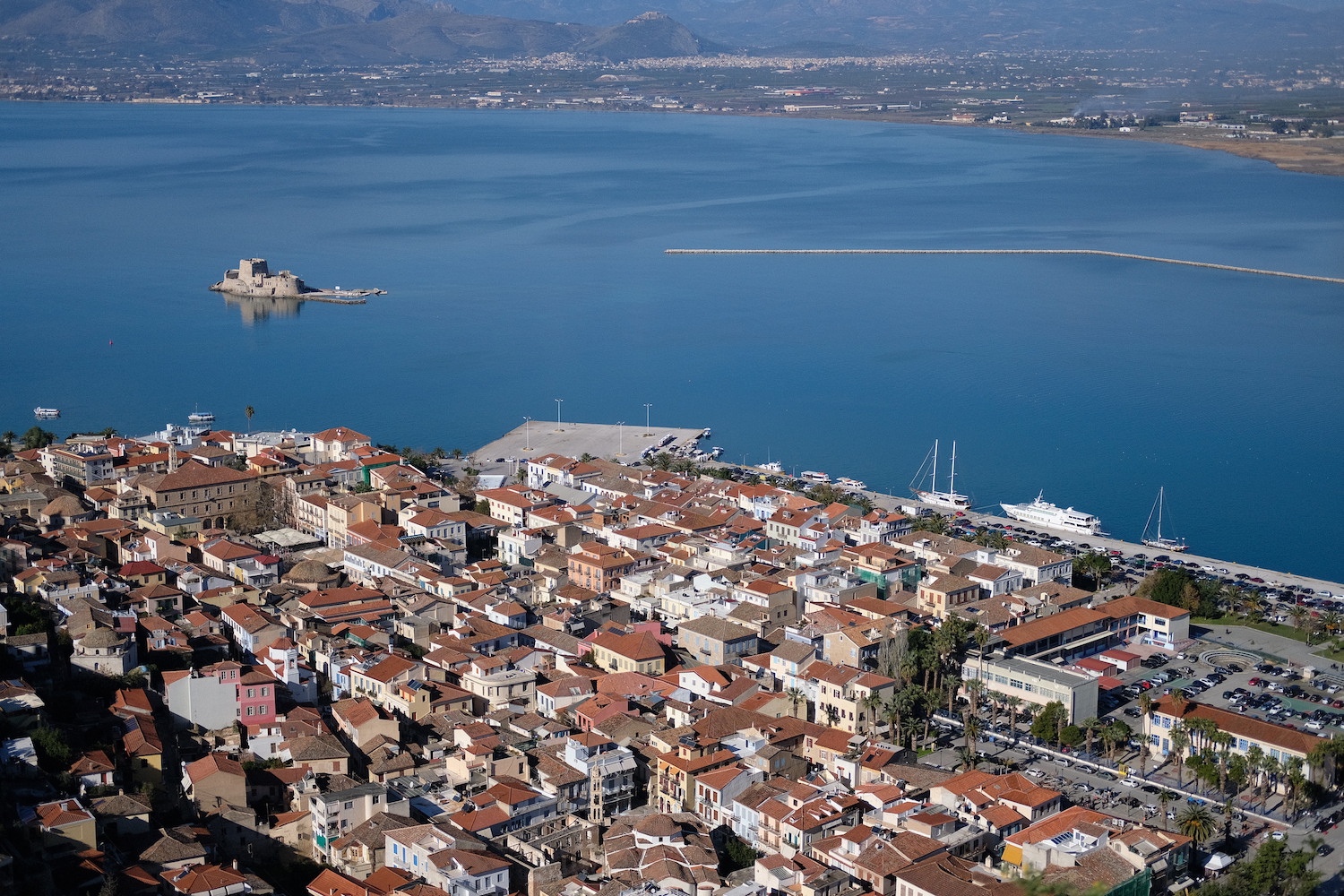
Above the historic center rises the Palamidi fortress, clinging to a 216-meter hill. To climb up to it, you have to overcome 921 steps.
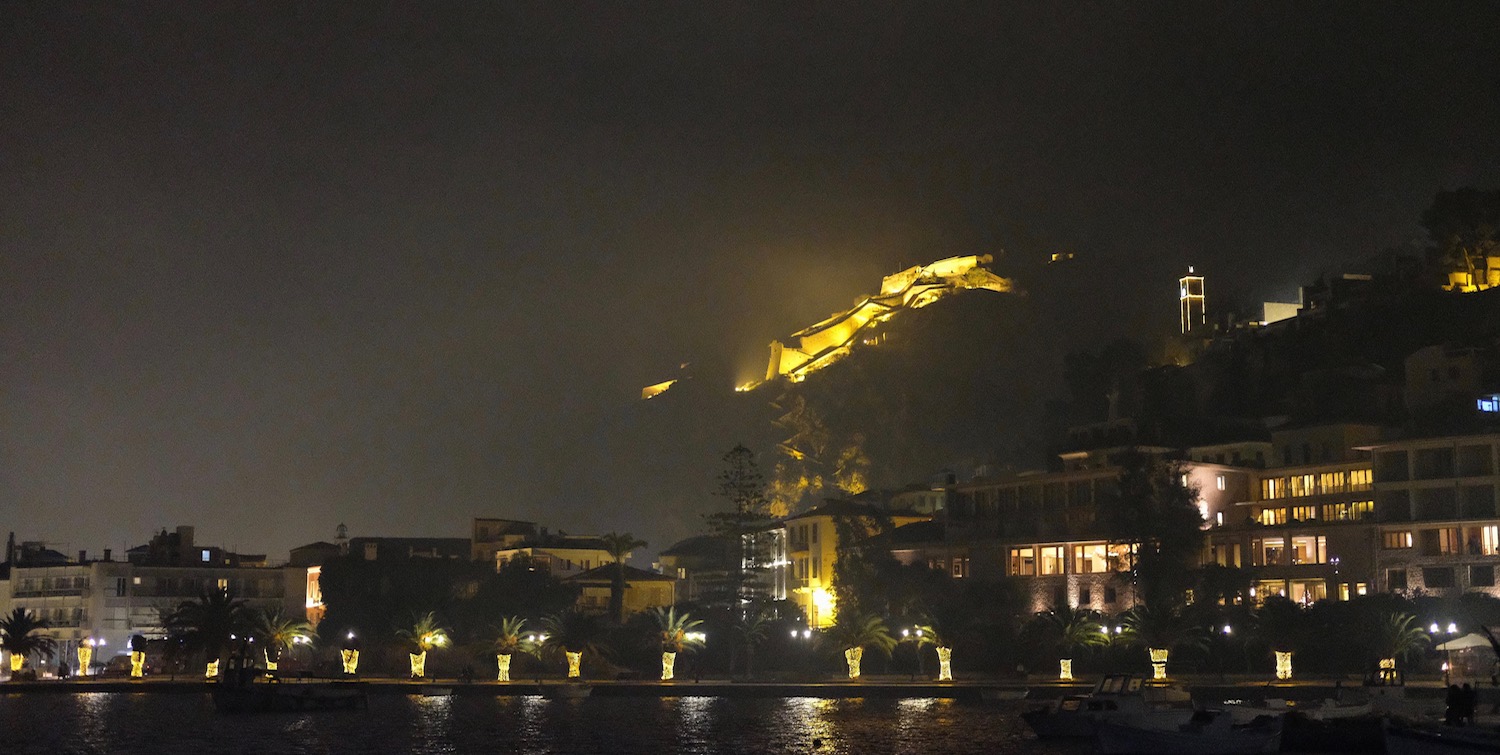
During a relatively short span of its history, the city belonged to the French, Italians, Turks, and Greeks. The rulers changed roughly every hundred years, and it seems each people left something of their own in the city’s character.
Day 7 (December 30)
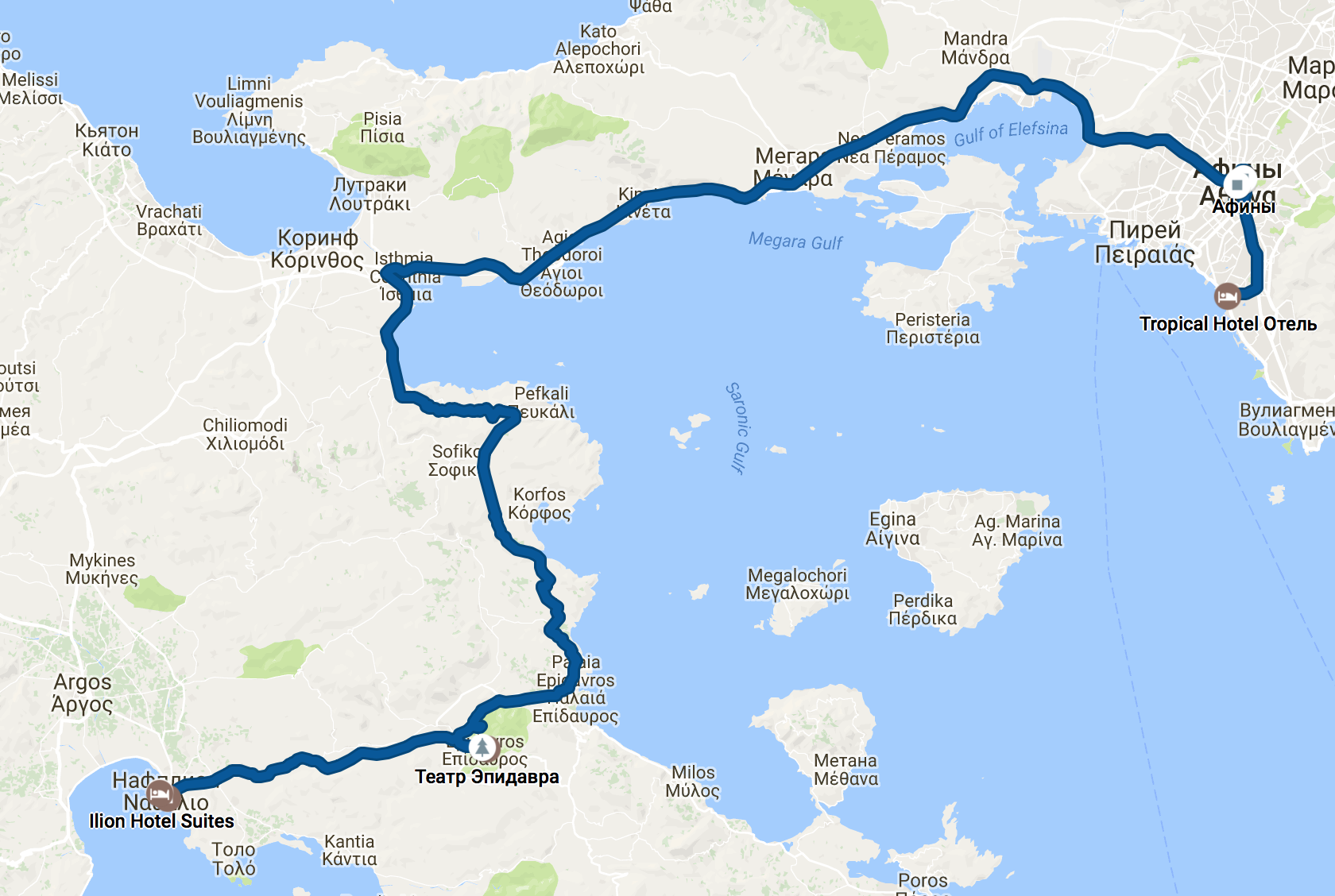
Epidaurus
An ancient city in Greece in the northeastern Peloponnese, on the eastern coast of the Argolid peninsula.
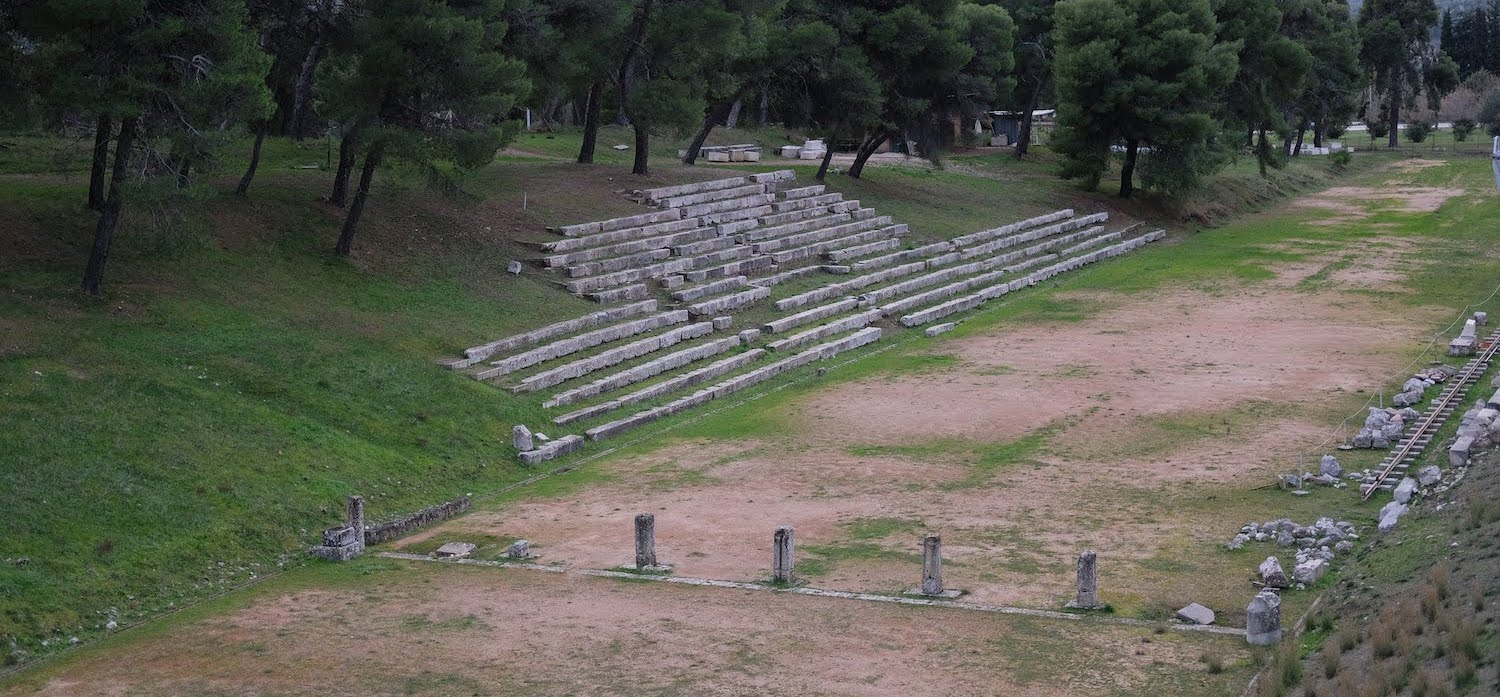
Within the complex, the greatest point of interest is the theater, built in the 4th century BC and later restored.
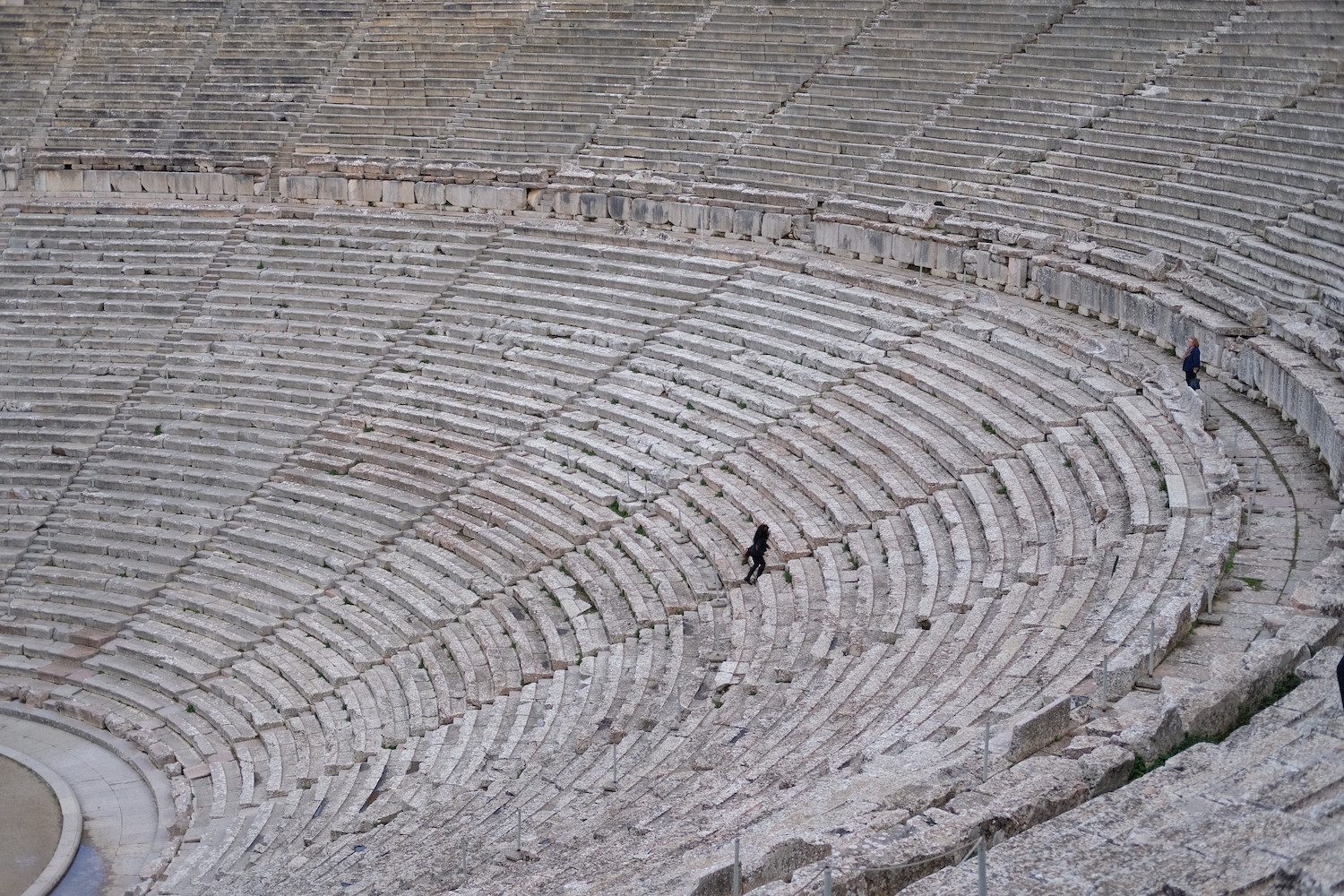
Climb to the top and listen to the quiet voices of people standing on the stage.
So, how was it?
Greece impressed me with its roads, landscapes, and historical places. But there is also something withering about it, as if it were proof that whatever was once great eventually turns to dust so that, sooner or later, it may become great again. I think that whole rhythm of rise and decline is Greece in a nutshell.